We built AI systems. Saw them lie. Then built the fix.
Future AGI was founded in 2025 by engineers who shipped AI at scale and saw evaluation become an afterthought.
Why we started
Teams building AI products spend months on the model, prompt, and infrastructure. Evaluation is often a quarterly spreadsheet. Then a provider quietly changes a checkpoint, or a prompt update bypasses review, and users begin getting wrong answers.
When support flags the issue, hundreds of users may have seen it already. Model drift began hours earlier. No one noticed because no one was watching.
We created Future AGI because every team we knew handled this problem alike: manually, slowly, and after the fact. Our goal was to make continuous evaluation as easy to add as a logging library. Instrument once, see every call, and catch issues before users do.
People who have shipped AI to production

He led ML infrastructure at a large-scale enterprise SaaS company, then spent four years building evaluation pipelines for recommendation and language systems. He co-founded Future AGI to share that work with every team.

Comes from distributed systems work at a high-throughput data processing company. Designed Future AGI's tracing and telemetry layer for span-level attribution. Focused on evaluation latency and keeping SDK overhead below 5ms.
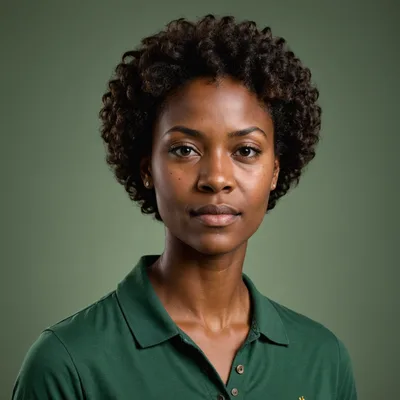
Built documentation and developer community programs at a developer tools platform, taking a dev program from zero to scale. Joined Future AGI to apply that discipline to AI observability.

Led platform engineering at two high-growth fintech companies through rapid scaling. Brings production operations discipline to Future AGI's infrastructure: reliability targets, rollout procedures, and on-call rotations that build customer confidence in uptime.
Our principles
- Show truth, not dashboards. Green gauges are meaningless when calls are drifting underneath. We report what ran, not what the model says it did.
- Latency is a feature. An evaluation layer adding 200ms to every call will be switched off. We target less than 5ms overhead on the critical path.
- Your data belongs to you. Prompts, rubrics, and trace data remain yours. We never train our models on customer evaluation runs.
Based in San Francisco
Our headquarters is in San Francisco, and we use a hybrid model. Most of the team works in the Bay Area, while a few engineers are fully remote.
We are hiring engineers in distributed systems, ML infrastructure, and developer tooling. See open roles below.
Get in touchWant to see what we made?
Start evaluating for free. No credit card needed.